
Why Moorland Peat Bogs Matter: How Blanket Bog Restoration Reduces Flood Risk
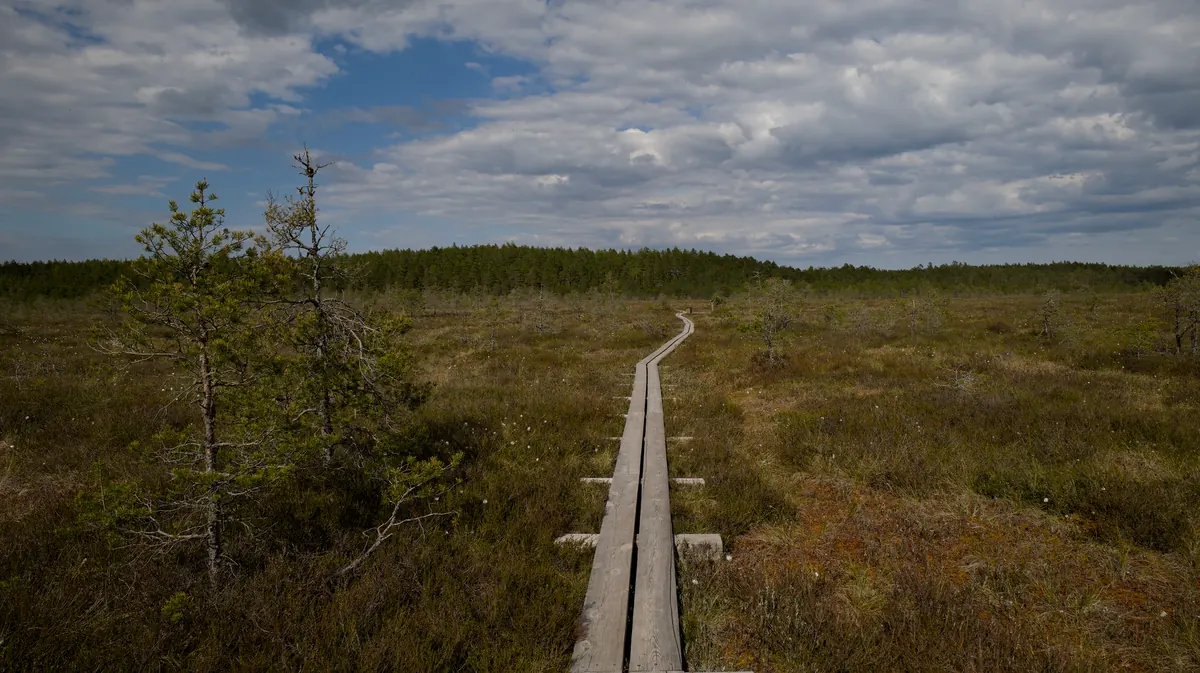
Stand on any moorland ridge after three days of rain and you can hear the ground before you see it. Water moves under your boots, squeezes between tussocks of cotton grass and gathers in the dark pools that give a healthy bog its speckled look. That wet, uneven surface is doing a job. It is holding back rain that would otherwise be in the beck by lunchtime and in the village by teatime.
Blanket bog — peat that has spread across whole hillsides rather than filling a single basin — is the upland equivalent of a reservoir with no dam, no valve and no maintenance bill. It has been storing water and carbon for thousands of years. Over the past two centuries we have drained, burned and grazed much of it into a state where it sheds water fast and loses carbon instead of banking it. Reversing that damage is slow, unglamorous work. It is also some of the most useful flood defence spending available in a rural catchment.
What blanket bog is, and how it forms
Blanket bog needs two things: cool, wet weather and ground that is not steep enough to shed every drop. In our uplands those conditions have persisted long enough for peat to build across ridges, saddles and gentle slopes, not just in isolated hollows.
The architect is sphagnum moss. It grows at the surface, dies at the base, and does not fully rot, because waterlogged, acidic, oxygen-poor conditions slow decomposition to a crawl. What is left becomes peat. Growth is measured in millimetres a year, so a metre of peat can represent a very long stretch of human history. Dig into a good bog and you are reading a record of rainfall, pollen and pollution laid down over millennia.
Sphagnum is also the reason a bog behaves like a sponge. The moss holds many times its own weight in water inside its cells, and the loose upper layers of peat soak up more.
The sponge on the hillside
A working bog is not a pond. It is a shallow, sprawling, leaky sponge. Rain is absorbed by moss and stored in the upper peat, then released slowly into the streams below. A heavy shower that might otherwise reach the river in twenty minutes is spread over hours.
That delay matters downstream. Watercourses that rise quickly put pressure on bridges, culverts, road drains and front doors. Anything that slows the arrival of water in a headwater, and stores part of it, reduces the peak. It also keeps the low flow going in a dry summer, which matters for fish and for farms taking water from the beck.
Damage reverses the process. Where peat has been cut by drainage ditches, rain runs off along them like a network of small pipes. Where it has eroded into gullies, water cuts deeper channels each winter, flushing sediment downstream and leaving bare, dry peat behind. A degraded bog can shed water almost as fast as a car park.
Carbon that took millennia to bank
Peat soils are the country's largest store of soil carbon. A growing bog is a net carbon sink, though a slow one. An eroding bog is a source: bare peat oxidises in the air, and storms wash carbon off the hills and into reservoirs, where it shows up as the brown colour that water companies have to pay to treat.
Fire is the sharper risk. Dried peat burns, sometimes smouldering underground for weeks, and a single bad burn can undo decades of accumulation while leaving a scar that is difficult and expensive to revegetate. A restored bog is wetter, so it is more fire-resistant as well as more absorbent. The carbon and flood arguments point the same way.
How the damage happened
There is no single villain here. Most upland peat has been worn down by a combination of pressures that seemed sensible at the time:
- Drainage grips cut to dry the ground for grazing and shooting
- Rotational burning of heather, which can scorch the peat surface and dry the moss layer
- Heavy grazing and trampling, which strips vegetation and exposes bare peat
- Air pollution, where nitrogen and sulphur deposition favour coarse grasses over sphagnum
- Tree planting on deep peat, which dries it out and shades out the moss
- Wildfire, plus erosion from tracks, and footpaths that widen year by year
Add more intense rainfall and you get the gullies many moors now carry: raw, black and still growing.
What restoration actually involves
Restoration is mostly about getting water back into the peat and keeping it there. In practice, a scheme usually works through several stages:
- Survey first. Walk the site, map the grips, gullies and bare patches, and work out where the water is escaping fastest.
- Block the drains. Peat, stone, timber or plastic dams are set into ditches so water pools behind them and soaks sideways into the peat instead of running off.
- Reprofile and dam gullies. Steep sides are softened and check dams built, so storm flows slow down and drop their sediment rather than cutting deeper.
- Stabilise bare peat. Heather brash, lime and seed mixes are spread by hand or helicopter to hold the surface while plants return.
- Bring back sphagnum. Plug planting, or spreading moss fragments across wet ground, kick-starts the species that does the real work.
- Change the management. Lower grazing pressure, stop burning on deep peat, and keep tracks and paths in one place.
- Keep coming back. Dams blow out, brash washes away, and a site needs checking for years, not months.
Most of this is done on foot or with small machines, and often by contractors who camp on the hill for weeks. It is expensive, slow work in weather that rarely cooperates. It is also one of the few kinds of conservation where you can see the result within a season: pools filling, moss greening, the beck below running clearer.
The honest case on flood risk
Bog restoration is not a substitute for flood defences, and anyone who promises otherwise is overselling it. The evidence is strongest for small headwater catchments and for the more frequent, moderate storms. In a huge flood on a big river, the bog's contribution is a modest share of the total.
But a moor is usually the top of the catchment, and every hour of delay up there is an hour gained in the village below. Restoration also stacks up alongside other measures: leaky dams in woodland, hedgerow planting, storage ponds and reconnected floodplains all work on the same principle of slowing water down. Done badly, though, restoration can backfire — blocking a drain without revegetating the peat can simply push water onto bare ground and start a new gully. Good schemes are planned as a whole catchment, not a single hillside.
How to help, from the valley up
You do not need to own a moor to make a difference. A few practical things help:
- Buy peat-free compost and potting mixes. Commercial peat extraction destroys the same habitat in lowland form.
- Volunteer for sphagnum planting or survey days. Wildlife trusts, national parks, rivers groups and moorland partnerships run them, and no experience is needed.
- Stay on paths across bare peat. A widened path becomes a gully in a wet winter.
- Never light fires or disposable barbecues on moorland, and report smouldering ground even weeks after a fire.
- Keep dogs on leads from spring through midsummer, when curlew, lapwing and golden plover are nesting on the ground.
- Ask questions locally. Parish councils, national park authorities and landowners all hold moorland management plans, and public support makes a difference when restoration funding is decided.
- Report new erosion. A photo and a grid reference sent to your local trust or river group often gets a gully looked at before it becomes a ravine.
Peat grows back at roughly the rate your fingernails do. That is the frustrating part. The encouraging part is that a bog responds quickly once water is back in it, and the benefits — slower runoff, cleaner water, stored carbon, wading birds in spring — arrive long before the peat itself does. If you live downstream of a moor, that wet ground under your boots is working on your behalf.
Photo: Lauri Poldre / Pexels