
Barn Owl or Tawny Owl? A Beginner's Guide to Identifying UK Owls in Rural Areas
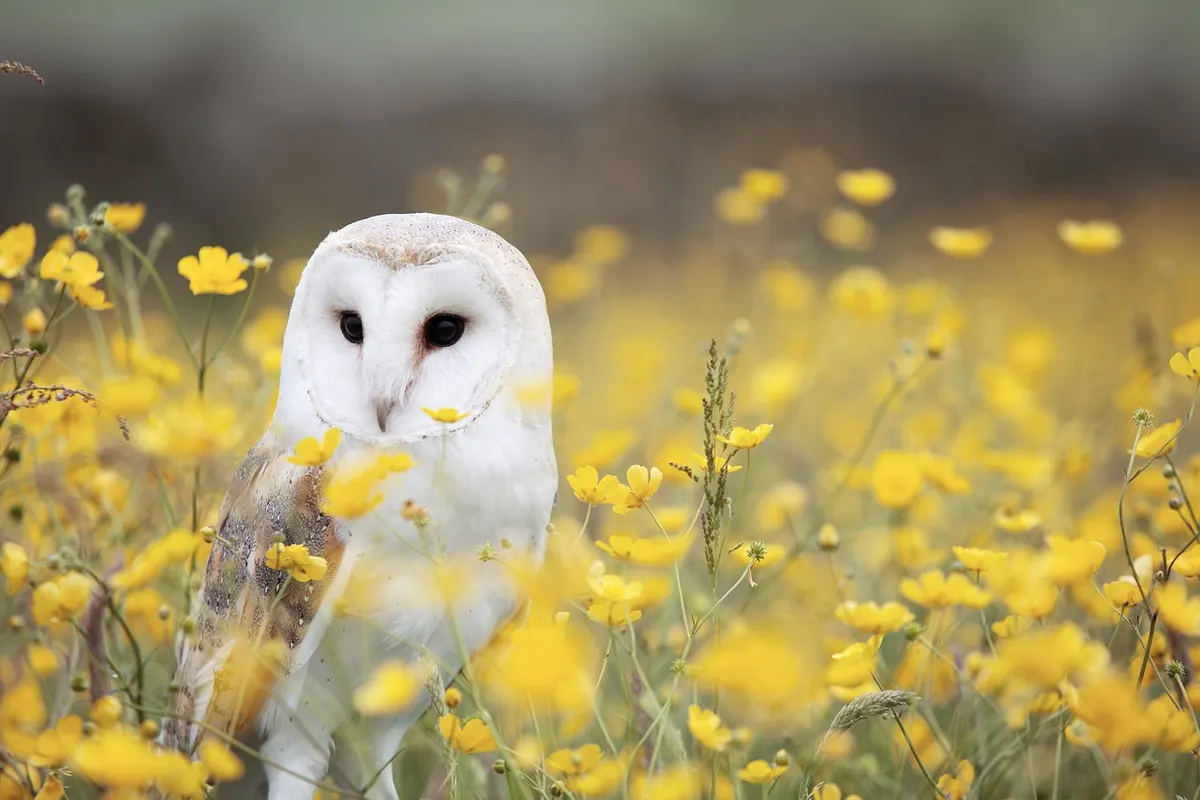
Five owl species breed in the UK, but two account for almost every owl a rural resident or evening walker is likely to meet: the barn owl and the tawny owl. Both eat small mammals, both hunt mostly between dusk and dawn, and both are heard far more often than seen. Telling them apart comes down to three things — silhouette, sound and setting. Learn those and a twenty-minute walk at dusk starts producing owls you had been walking straight past.
Start with the shape
A barn owl is built for open country. It has a long, slim body, long broad wings and a white, heart-shaped face with no ear tufts at all. In flight it looks buoyant and almost moth-like, floating low over the grass with slow, unhurried wingbeats and long glides. When it turns away you notice how narrow it is — a pale blade sliding along the hedgerow.
A tawny owl is built for trees. It is stockier and rounder, with broad wings, a large rounded head and no visible neck. Its flight is more direct and heavier, usually seen as a brown shape crossing a gap in the canopy at head height before vanishing into cover. A useful rule: if a pale bird is working a field edge in the open, think barn owl. If something chunky and dark drops out of an oak and disappears, think tawny.
Colour: the white ghost and the brown shadow
Barn owls are pale underneath, often pure white on the belly, with golden-buff and grey upperparts dusted with fine dark speckles. The face is white with dark eyes set in it, which gives the bird its unearthly look in headlights. A rough guide for close views is that females tend to show more speckling and darker chests, while males look whiter — but it is not dependable enough to call a bird on its own.
Tawny owls come in brown and grey forms, and both are heavily mottled, streaked and barred in darker tones. The eyes are black and the face is broad and pale with a dark rim. That plumage is the point of it: a tawny sitting against bark or a hole in a trunk can be two metres away and completely invisible until it moves.
What you'll actually hear
The tawny's twit-twoo is not one bird
The famous call is a duet. The "twit" — often written as kewick, a sharp, slightly wavering note — is usually the female. The "twoo", a soft trembling hoot, is the male answering. The two halves often come from different trees, sometimes well apart, which is why people spend ages staring at the wrong oak. Alongside that you may hear a long, wavering hoot repeated over and over, and a hard, indignant kewick-kewick alarm that birds use when a person, cat or fox passes beneath a roost.
Tawny owls call most from late summer through to early spring, and the shortest days are the peak. Listen at dusk, again in the middle of the night if you happen to be out, and once more in the half hour before dawn.
The barn owl does not hoot
A barn owl's main call is a drawn-out, rasping screech — harsh, hissy, and hard to place, often given in flight. It is not a hoot in any sense. Around a nest you may also hear a repetitive snoring hiss from the birds inside, and soft chirruping contact calls. The confusion runs both ways: people hear a tawny's kewick and assume barn owl, then hear a barn owl's screech and assume a fox or a cat in trouble.
Where each owl lives, and how it hunts
- Barn owl: rough, tussocky grassland, field margins, verges, marsh edges, young plantations and the buildings that go with farming — old barns, sheds, church towers, and nest boxes. It needs a good supply of voles in long grass, so field edges matter more than fields. It hunts on the wing, quartering low and slow, and in winter when food is short it will hunt in daylight.
- Tawny owl: mature broadleaved woodland, parkland, churchyards, big hedgerow oaks, large gardens, and town squares with old trees. It needs somewhere to nest — a hollow trunk, a large cavity, an old crow's nest or a proper owl box. It hunts from a perch, watching and listening, then dropping onto prey.
- Signs to look for: barn owls leave white splashes of droppings streaking a beam or ledge, plus black pellets beneath. Tawny roosts give you grey, furry pellets on the ground under a tree and a fine scatter of down caught on twigs.
Keep your distance from any nest or roost you find, and resist the urge to linger. All wild birds in the UK are legally protected, and barn owls in particular have extra protection against disturbance at their nest sites. If you are a landowner thinking about putting up a box, get advice on siting before you drill anything.
The owls you might be looking at instead
Three others are worth knowing. The little owl is small, flat-headed, white-spotted and yellow-eyed, and it sits in the open by day on fence posts and stone walls, yelping a sharp kiew kiew. The short-eared owl hunts rough fields and moorland in daylight on stiff, deep wingbeats, and is pale with heavy dark streaking along the body. The long-eared owl is a woodland bird with orange eyes and tall ear tufts, almost never seen unless you stumble on a winter roost, though its young have a begging call like a rusty gate.
A twenty-minute field routine
- Time it properly. Go out for the last half hour of light and the first half hour after. In deep winter, try mid-afternoon instead — barn owls often start early when they are hungry.
- Choose an edge, not a middle. A boundary between rough grass and a hedge, ditch or barn gives you the best odds of both species.
- Stand still and listen for five minutes before moving. Owls locate you by sound too, and footsteps cover their calls.
- Sweep low first, then up. Scan the grass at knee height for a pale shape, then check the lower branches and holes of the biggest trees.
- Check the ground for evidence: pellets, whitewash, down, or a scatter of feathers where something was plucked.
- Use a torch briefly, not continuously. A short, low-powered sweep is far less disturbing than a beam held on a bird.
- Write it down — date, weather, what you heard and where. Patterns build quickly when you keep notes.
Owls are creatures of routine. A field that gives you nothing in October may screech at you every evening in February, and a tawny that ignores you all summer will start answering back as the nights draw in. Go back to the same few spots, at the same times, and let the birds do the rest. If you ever find one grounded or injured, do not handle it yourself — ring a local wildlife rescue and follow their instructions.
Photo: Pexels / Pixabay